Saving family football footage with a Raspberry Pi and a 1928 projector
Posted: Sat Jun 13, 2026 3:05 am
This project started when the maker, David Stein, was hunting for footage of his dad’s high school football games. David’s grandfather had captured some on Super 8 film, which David paid to have scanned, and his dad’s high school had donated its 16mm game films to the Heinz History Center in Pittsburgh, PA, which he had transferred.
Unfortunately, not all of his dad’s games were archived, and it was extremely expensive to digitise the ones that were. David kept digging and eventually found more reels in a storage room at the school. They were rotting, and vinegar syndrome (acetate film base degradation) was already setting in. Among them were three of his dad’s football games, plus dozens more from other years and other teams.
At $200 per reel, David couldn’t afford to rescue all of the actively decaying film, so he decided to build his own scanner instead.
https://www.youtube-nocookie.com/embed/ ... ure=oembed
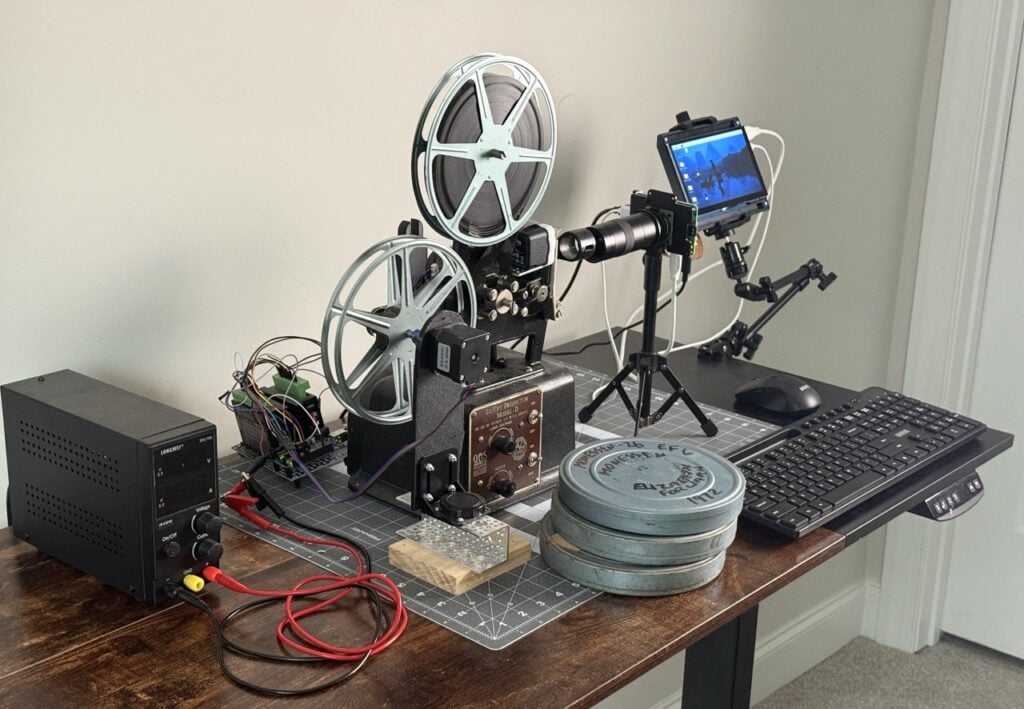
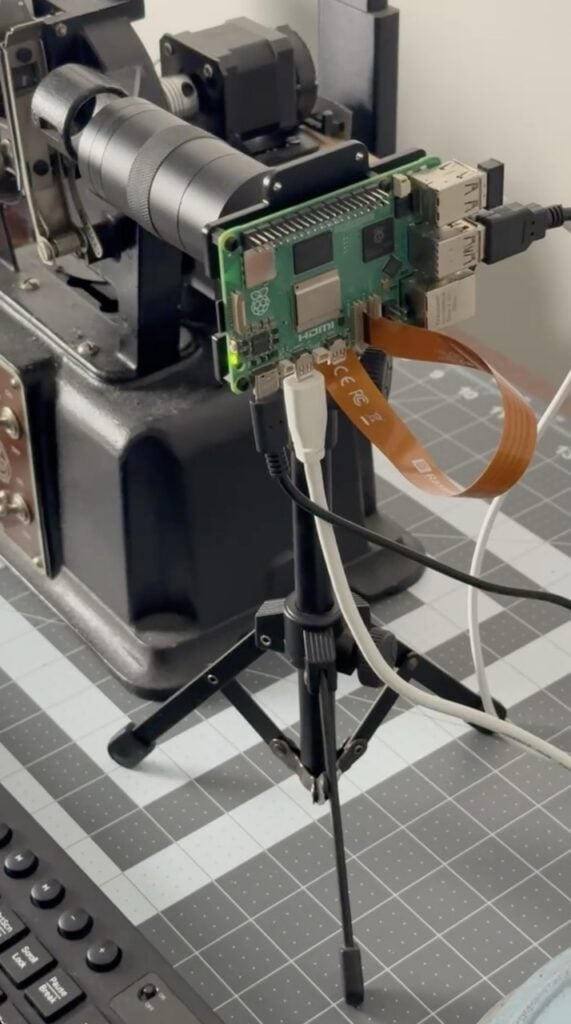
At the heart of the system is a film projector from 1928, which gently moves the fragile film through a gate without tearing it. David modified the projector to make it more precise and capable of talking to a Raspberry Pi camera.
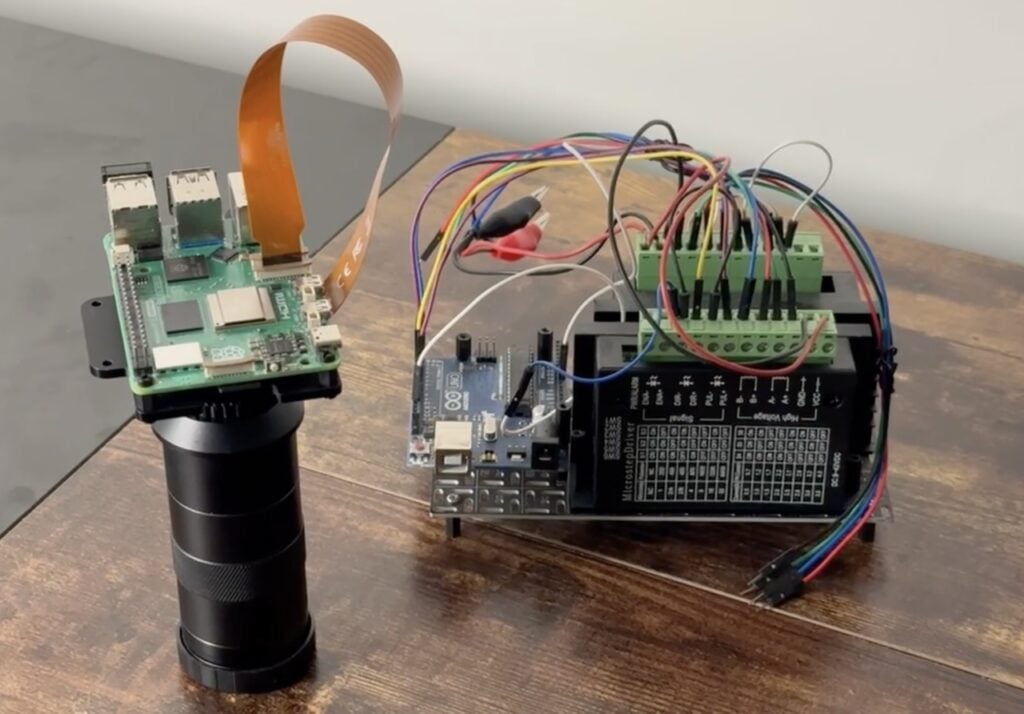
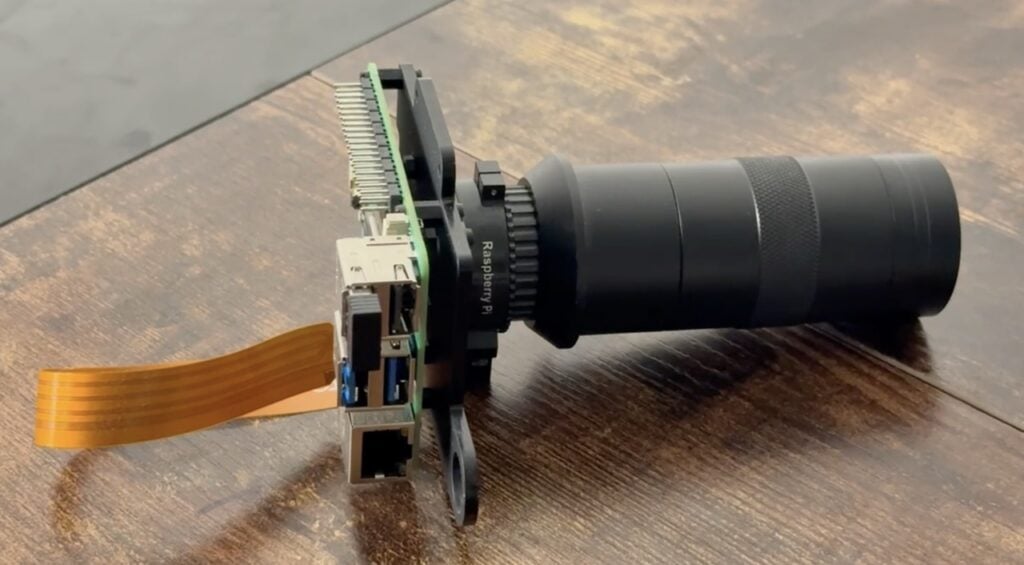
The brain of the build is a Raspberry Pi 5, paired with a Raspberry Pi High Quality Camera and a microscope lens aimed at the film gate. Version one of the custom film scanner, which was built on a Raspberry Pi 4, snapped an image of every frame — for a 400-foot reel containing 16,000 frames, this process took more than 18 hours. Upgrading to Raspberry Pi 5 meant the machine was able to overcrank, basically allowing the film to run non-stop. This reduced the time it takes to capture everything to about four hours.
https://www.youtube-nocookie.com/embed/ ... ure=oembed
An Arduino and two TB6600 drivers run the transport and take-up reels continuously at eight frames per second, with a ten-second soft ramp to prevent the system from jerking the film. When it runs, the Raspberry Pi camera records continuous video at 30 frames per second in 60-second segments, using a five-millisecond exposure to freeze each frame mid-pulldown. Afterwards, FFmpeg (an open source command-line framework) and a Python pipeline extract the frames and keep the sharpest one from each group.
The players in these films are now in their 70s, and David says that, with this project, it’s as though they’re seventeen again for a few minutes. His dad very much appreciated being able to share his high school games with his son, and David even made a new friend from one of the older reels who calls him periodically to talk about the games.
The maker, David Stein, is the film preservationist and software engineer behind Eight by Two Films. He builds custom machines for analogue film preservation. His work has been featured by The Verge, Popular Mechanics, and Nerdist.
The post Saving family football footage with a Raspberry Pi and a 1928 projector appeared first on Raspberry Pi.
Source: https://www.raspberrypi.com/news/saving ... projector/