


A new issue of Raspberry Pi Official Magazine has landed today! A wild guess led us to the conclusion that you would like this article about an Amstrad PPC 640’s Raspberry Pi makeover the best.
When faced with a broken Amstrad PPC 640, Mikey Damager had two choices: return the machine to its former glory or tear it apart and rebuild it using modern parts. He decided to do the latter, turning what was Amstrad’s first portable IBM PC compatible computer, released in 1987, into a cool-looking cyberdeck powered by Raspberry Pi 4. It produced a machine capable of running an interactive fiction project for Mikey’s master’s degree.
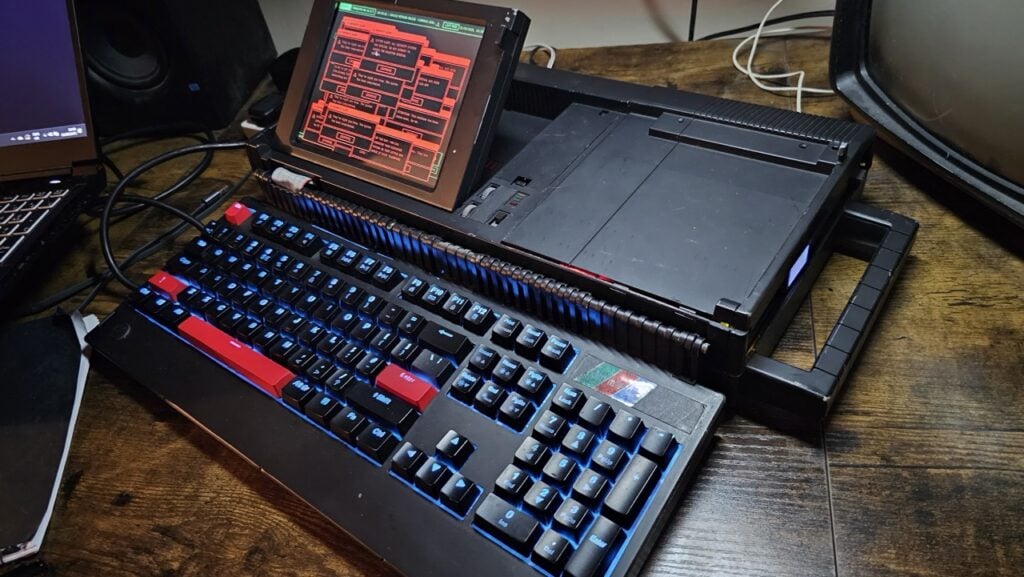
The project is faithful to Amstrad’s original cool-looking case design
“I wanted to explore AI and machine learning to see if I could incorporate some of the tools into a creative workflow in a way that felt somewhat critical and not too detached,” he says. “I ended up making something that uses LLMs to explore what it’s like to be existentially brutalised by an evil corporation which has hidden access to pseudo-sentient technology. It’s supposed to be somewhat tongue-in-cheek and satirical.”
Key to success
Mikey had considered repairing the original machine, but doing so would have entailed a huge amount of work. “The screen was completely smashed and the case was pretty dinged-up. A few bits of plastic had also snapped off.”
Deciding an upgrade was preferable, he opened the case and detached the screen and keyboard. “The chassis is basically a plastic suitcase with a screen and a keyboard attached,” Mikey says. “Once inside with a screwdriver, the motherboard practically leapt into my arms. I was left with a big empty box that I could fill up with new gadgets.”
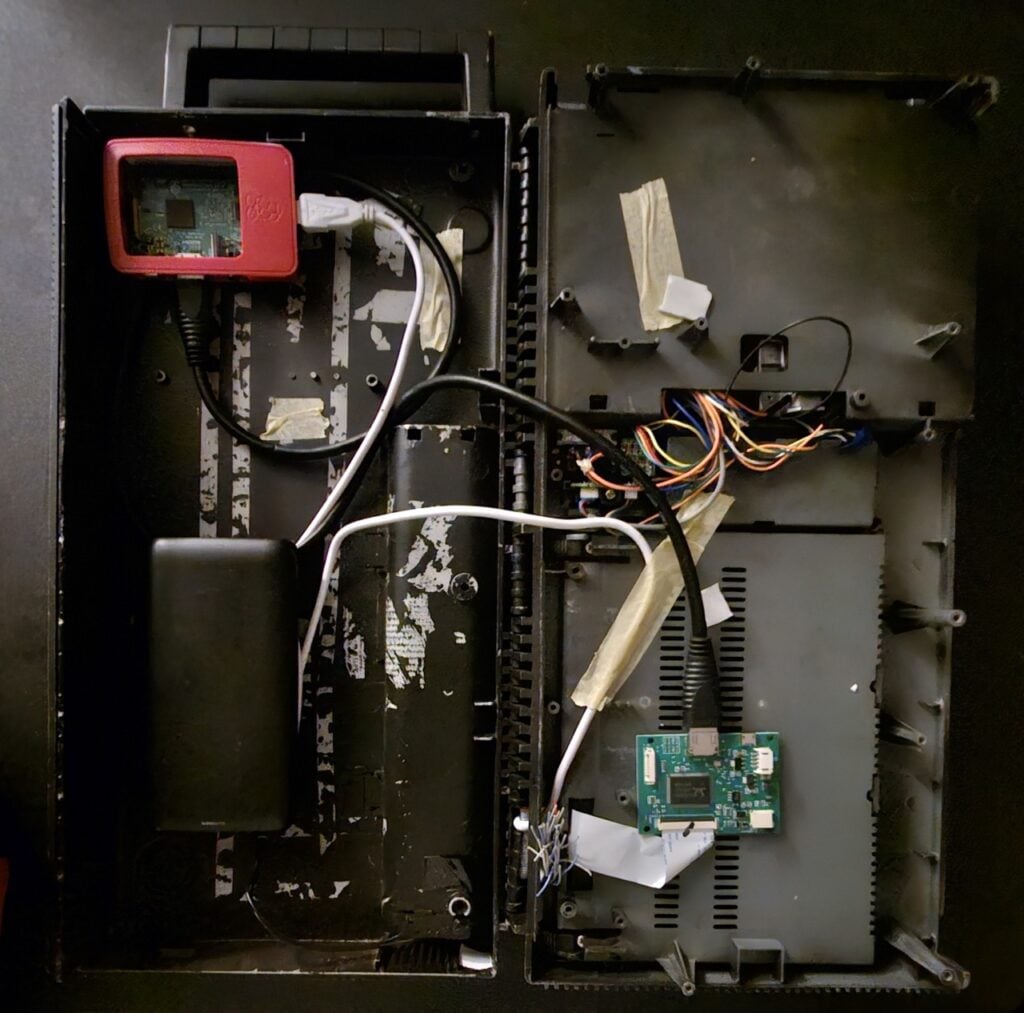
The original innards have been replaced, but Mikey has retained the motherboard in case someone wants it
The screen was replaced with an eight-inch 4:3 LCD panel connected to an HDMI driver board. Mikey used screen repair tape to fix this panel to a sheet of 2mm acrylic for protection, and he connected the display to Raspberry Pi 4 before wiring the PPC 640’s original LEDs and switches to the new hardware, allowing the system to be easily powered up.
Replacing the keyboard proved straightforward too. “One of the best things about the PPC is that it has a full-size keyboard, which means that if you just remove the little plastic tangs where the Fn key should be, you can grab pretty much any random full-size mechanical keyboard, de-glove it, and there’s a good chance that it will fit almost perfectly.”
Black is the new grey
The floppy disk drive was also retained, even though it was disconnected. “I wired the write-protect switch from the floppy drive to an Arduino to turn on a small screen when a disk is inserted, but it doesn’t read any data,” Mikey says.
The biggest challenge was the development of the front end. “I needed what’s running on the screen to look and feel suitably cyberdeck-y,” he explains. “The piece is built around a React app that’s styled to look like an OS. Raspberry Pi is running FullPageOS, so it’s just a kiosk that boots straight into a web page over Wi-Fi, with the back end running either from my laptop or in the cloud.”
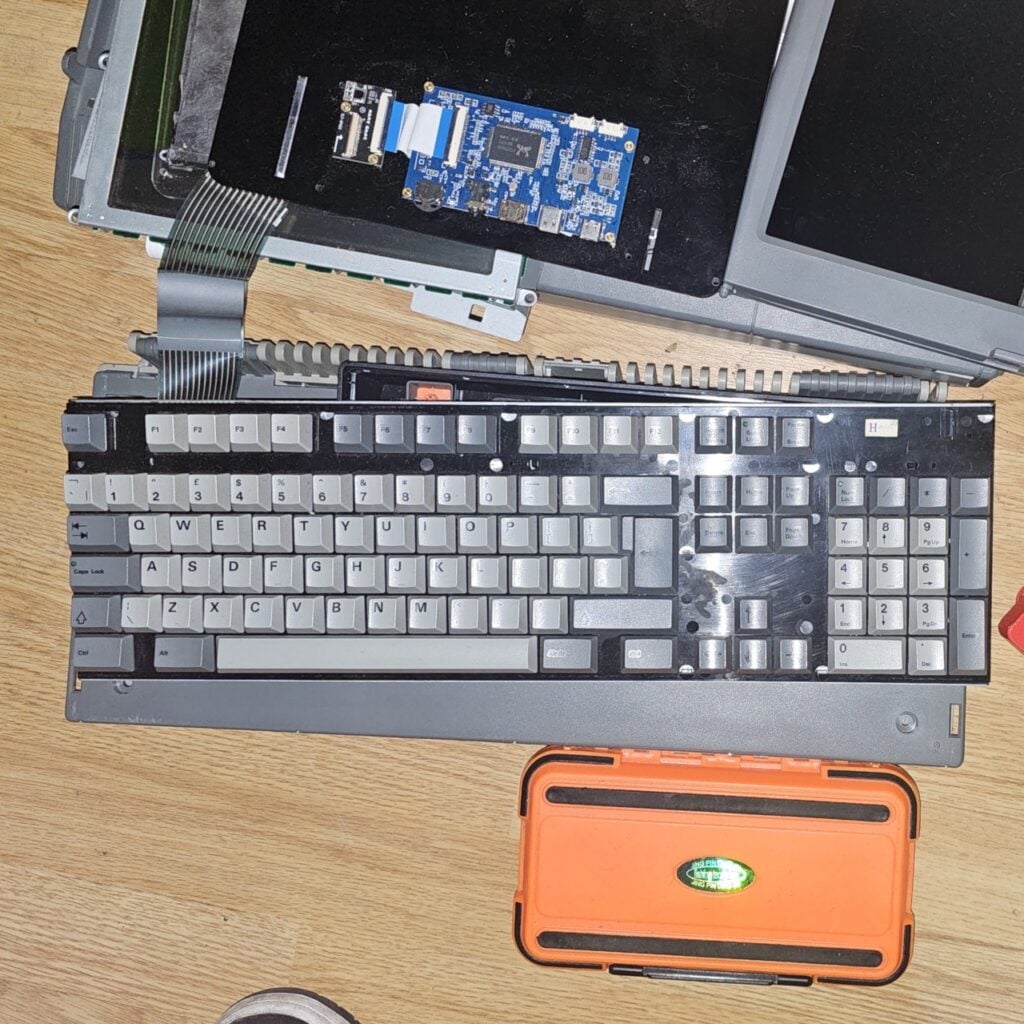
Mikey says the PPC 640’s plastic had become brittle over time, so care was needed when working on the case
It means the Raspberry Pi is just handling the display and user input, ensuring that the cyberdeck does the intended job. As a finishing touch, Mikey sprayed the grey computer black and added colour to some of the keys, but he’d like to go further. “There are a few cosmetic improvements I’d like to make, such as new badges and branding,” he says. “I’m also planning a better power solution, because currently it’s running from power banks that I’ve hidden inside, and I’d like something a bit more elegant.”
Raspberry Pi Official Magazine #161 out NOW!
You can grab this issue from Tesco, Sainsbury’s, Asda, WHSmith, and other newsagents, including the Raspberry Pi Store in Cambridge. It’s also available from our online store, which ships around the world. And you can get a digital version via our app on Android or iOS.
You can also subscribe to the print version of our magazine. Not only do we deliver worldwide, but people who sign up to the six- or twelve-month print subscription get a FREE Raspberry Pi Pico 2 W!
The post Amstrad PPC 640 cyberdeck gets a Raspberry Pi makeover appeared first on Raspberry Pi.
Source: https://www.raspberrypi.com/news/amstra ... -makeover/